×

Two Together: Save £100!Save £100 when you purchase two funeral plans together. Call us for more details.

Written by Emily Cross.
12 minute read

There’s a quiet worry lots of people carry around.
“I think I want something simple. But…will my family think I didn’t care?”
Or the other way round, often expressed by adult children: “Mum always said she didn’t want a fuss. But will we regret it if we don’t do a ‘proper’ funeral?”
If you can relate, it may help to know this comes up for a lot of families – feeling torn between personal wishes and what’s expected.
A more traditional funeral with a procession, pallbearers and large floral displays can be comforting. For some families, it’s the right thing. But it’s not the only way to say goodbye.
Direct cremation is cremation without a service at the crematorium, and for many people it fits their values better. This article outlines how it works, what families often worry about, and the different ways people choose to remember someone afterwards.
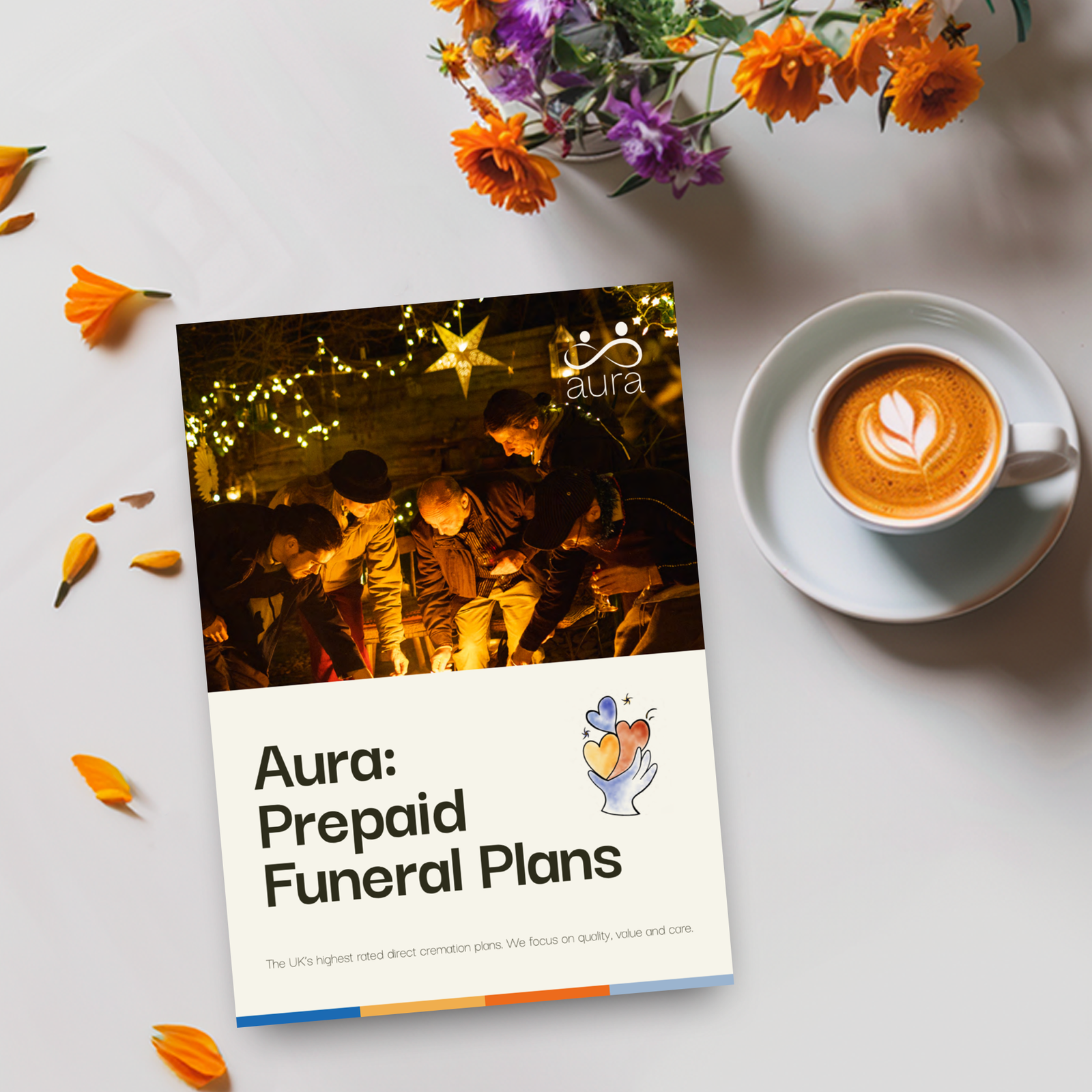
If you’d like to know more about how to plan a cremation with Aura, our brochure is a helpful place to begin.
Our funeral plans are a helpful way to put everything in place for you or someone else.
When the time comes, our experienced team will be here to guide you through each step, offering support and advice whenever you need it.
To find out more about how our plans work, what’s included, and our story, you can request a brochure by clicking the link below. We will then send you a copy by email or First Class post—whichever you prefer.
A direct cremation is generally a quieter, more simple arrangement when compared to a traditional funeral ceremony.
The cremation is respectfully carried out in private, without mourners present and without a ceremony on the day. The person who has died is placed in a simple coffin and taken to the crematorium in a private ambulance. After cremation, some families ask for the ashes to be scattered in the crematorium’s Garden of Remembrance, while others prefer them to be delivered to a home address.
From there, they have time to decide how they’d like to mark the person’s life, whether that’s a memorial later on, something small at home or local pub, or something more private and intimate.
People sometimes assume “direct” means impersonal, but it simply describes the format: the cremation takes place without a service at the crematorium on the day. For many families, that’s a practical fit when someone wanted a simple send off, didn’t want a large or formal funeral, or would rather that money be used in other ways.
It also doesn’t mean there’s no goodbye. It just means the goodbye can happen differently, whether that’s privately, or later on with a memorial, gathering, or another tribute that feels right for your family.
While direct cremation is commonly associated with an unattended cremation, with Aura, families have the option to choose either an unattended cremation or an attended service if they’d prefer an in-person goodbye.
If the family chooses an attended service, attendees can gather at the crematorium to pay their respects without a full traditional funeral ceremony. Families can also add personal touches, such as choosing music, readings, and including photo or video tributes.
Aura’s team can also help select a celebrant or a religious minister to oversee the service. After the cremation, the ashes are either hand delivered to the family within 21 days, or (if preferred) scattered at the crematorium’s Garden of Remembrance.
Funerals often follow familiar routines: the procession of cars, service, music, readings, flowers, and time with others who have come to pay their respects. For many families, that structure is helpful, and can even be healing. It can give the day a sense of order, and offer a shared way to mark a loss.
At the same time, it’s common to feel a pull towards what a funeral “should” look like, even if it doesn’t feel like the right fit. Sometimes that pressure comes from worry about family expectations, sometimes from concerns about what others might think, and sometimes from not wanting to make the “wrong” decision at an already sensitive time.
It may help to remember that there isn’t one correct way to show care or to honour someone’s life. A traditional service can be meaningful, and so can something more simple, or something held later on. What matters most is that it feels appropriate for the person who has died, and manageable for the people organising it.
For some, a more formal service brings comfort. For others, a smaller or less public goodbye feels more aligned and natural. If you find yourself leaning towards a simpler approach, it can be worth acknowledging that preference and talking it through with the people closest to you.

People choose direct cremation for a variety of reasons:
This is one of the most common reasons individuals and families mention. Some people simply dislike being the centre of attention, even in death. They want a low key send off. They’d rather their money go to their children, their partner, a charity, or just not be spent at all.
Grief doesn’t follow a set pattern or path. Sometimes the practical tasks happen before the emotional side catches up. A direct cremation can give you more breathing room. You can gather later, when you’re ready, rather than when the calendar forces it.
Families are often spread out. People have jobs, caring responsibilities, and health issues. Arranging a traditional funeral quickly can mean some people miss it, or feel pressured into travel they can’t manage.
With a direct cremation, a memorial or gathering is planned when it’s actually more possible for everyone.
For some, choosing a simpler funeral is partly about keeping costs under control and easing the burden on loved ones. According to SunLife, traditional attended funeral costs in the UK have risen by 146% since 2004 – so it’s little wonder more families are looking for alternatives. Direct cremation prices are generally far more affordable, making them an increasingly popular choice for those who want simplicity without the financial strain.
Many also choose to plan ahead, so their children aren’t left organising everything at short notice. Prepaid direct cremation plans allow people to fix the price today, helping to reduce financial pressure down the line.
If you’re someone who wants a simple funeral, you might worry about how it will come across to the people close to you. Having clear wishes can make decisions easier for them later.
Here are a few phrases that might be of help:
If you’re the adult child organising things, you can say:
It won’t remove every emotion. But it makes the choice feel intentional rather than rushed.
This is where families often relax, because they realise they still have options.
A meaningful goodbye can be:
If you and your family want something a bit more structured, you can create your own simple order of service for a memorial. A few words, a reading, a song, and then space to talk. No pressure to be “good at it”. People aren’t there for a polished ceremony, they’re there because they loved someone.
And if you don’t want a gathering at all, that’s okay too. Some people mourn privately. Some families keep it small by choice.
It often helps to understand, in plain terms, what needs to happen and what choices you actually have.
Some people feel unsure about choosing direct cremation, particularly if they’re aware that family members may have different expectations. It can help to remember that a simpler funeral can still reflect care and respect.
For some, it aligns closely with the person’s wishes. For others, it can reduce the number of decisions to manage at a difficult time. Cost can also be a practical factor, especially if the aim is to keep arrangements manageable for the family.
There isn’t one right approach. What matters is choosing an option that feels appropriate for the person who has died and workable for the people closest to them.
Normalising direct cremation means recognising it as one of several appropriate and respectful ways to arrange a funeral, rather than something that needs defending or explaining. It also means acknowledging that families have different needs, beliefs, relationships, and practical circumstances, and that those differences naturally shape the choices they make.
Some people will prefer a traditional funeral, and for many families that structure and shared moment feels important. Others may prefer something simpler, or may choose to separate the cremation from the gathering, and hold a memorial or tribute later on. Both approaches can be thoughtful and personal.
If you choose a simple cremation, it can help to be clear and matter of fact about it. For example: “We’re having a simple cremation, and we’ll remember them in our own way.”
However you approach it, it’s also worth allowing some space for yourselves. People often move quickly into planning mode, and it can take time for the emotional side to catch up. A simple arrangement can still leave room for a meaningful goodbye, in whatever form feels right for your family.

If you have any questions, would like a brochure or simply would like a chat through our services, our award-winning team is here to help.
Unlike other providers, we won’t hassle you with constant calls. We’ll simply ensure you have the information you need and leave you to come to a decision in your own time. When you’re ready for us, our team will be ready to help.