×

Two Together: Save £100!Save £100 when you purchase two funeral plans together. Call us for more details.


Written by Mitch Tapner.
11 minute read

When someone dies, families often need to make decisions at a time that already feels heavy and uncertain. One of the most common choices is between cremation and newer options such as aquamation. Some families may also be considering direct cremation, which is a simpler form of cremation without a formal service.
If you’ve been searching for “aquamation vs cremation”, or wondering which might feel right, this guide explains both in a clear and simple way, without jargon or pressure. It can also be helpful if you’re thinking ahead about end-of-life planning and want to understand your options in advance.
At Aura, we support families looking for simple, respectful funeral options with clear pricing. This guide is here to help you feel a little more certain, not more overwhelmed.
Key takeaways:
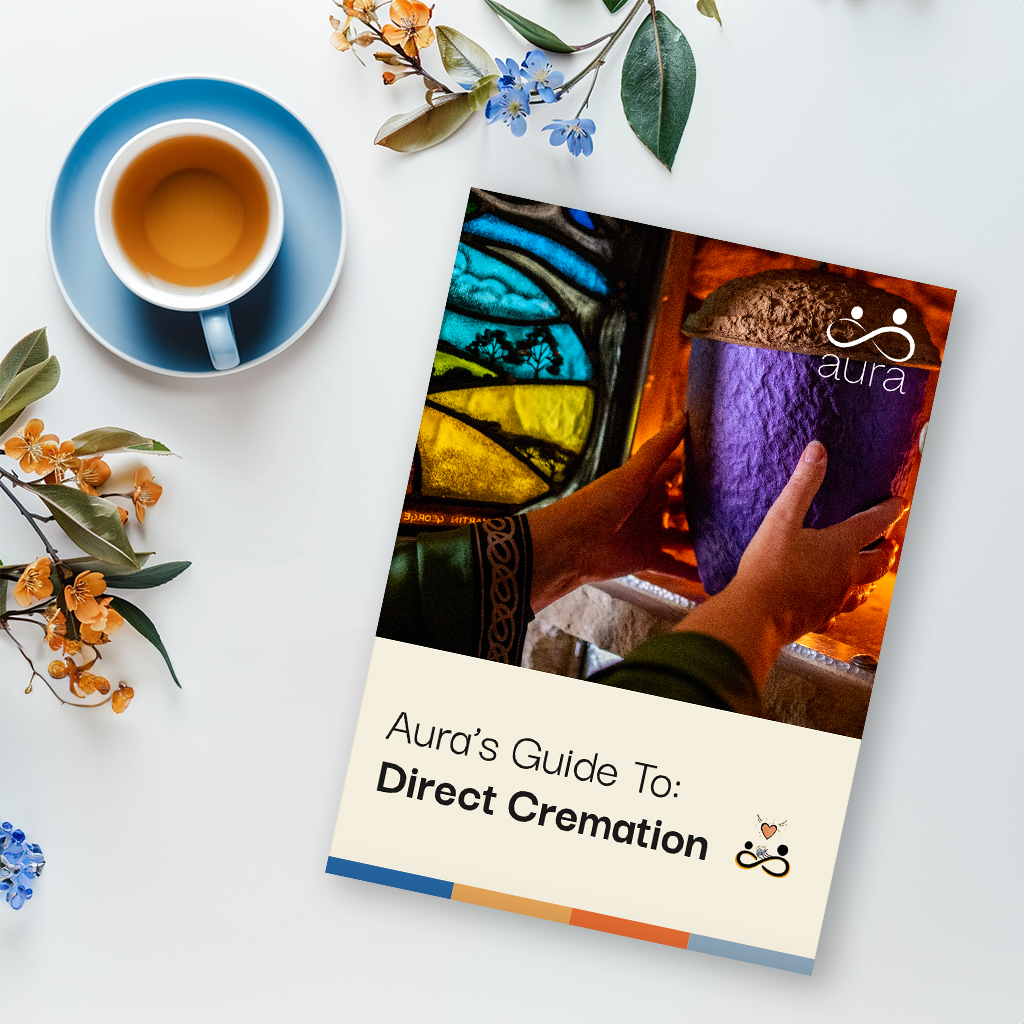
If you’d like more information about direct cremation and Aura’s funeral plans, then our downloadable guide can help. Find out why others are choosing this affordable, no-fuss alternative to traditional funerals and why it might be right for you too.
Download our guide by clicking the link below and learn more about this simple funeral plan option.
Aquamation, also known as alkaline hydrolysis or water cremation, uses water and a gentle alkaline solution to care for the body. It takes place at a much lower temperature than traditional cremation and uses a water-based process rather than flames. Cremation, in contrast, uses high heat. The person who has died is placed in a cremation chamber, where intense temperatures reduce the body to ashes.
At a basic level, aquamation uses water and an alkaline solution to gently break down the body, while cremation uses high heat to do the same.
The difference is not just technical. It can affect energy use, environmental impact and how the process feels to families. Aquamation is slower and gentler, where as cremation is quicker and more familiar across the UK.
If you’re comparing options, it can also help to understand the cremation process and the different types of cremation that are available, as this often shapes how people feel about their choice.
Families often compare aquamation and cremation for a few key reasons. Cost is important, especially when arrangements need to be made quickly. Environmental impact is also a growing concern.
For many people, the decision comes down to a few key considerations:
There isn’t one right answer, only what feels right for each family and their situation.
In aquamation, the person who has died is placed in a sealed chamber filled with water and an alkaline solution. The liquid is gently heated but not to extreme temperatures.
Over several hours, the solution helps break down soft tissue in a gradual and controlled way. The water circulates throughout, supporting an even and careful process.
At the end, what remain are bone fragments and a sterile liquid. The bones are dried and turned into a fine powder, similar to ashes.
This means the process is:
Many people feel this offers a gentler, more natural approach.
Cremation takes place in a cremation chamber, sometimes called a retort. If you’re unfamiliar with the process, it can help to understand what a crematorium is: a facility where cremations are carried out in specially designed cremators. You might also wonder how the body is prepared for cremation or how a crematorium works. Each step is carefully managed by trained professionals, with clear procedures in place to ensure the person who has died is treated with dignity and respect.
The body is exposed to very high temperatures, usually between 800 and 1,000 degrees Celsius. During this process, the body is reduced using intense heat, with soft tissue breaking down through combustion and bone fragments remaining.
Once cooled, these fragments are processed into ashes and returned to the family. Cremation is generally faster than aquamation and is widely available across the UK. It is also familiar to many families, which is often why people choose it, especially when time feels limited.
One of the main differences between aquamation and cremation is their environmental impact. If you’re comparing the two, you may be wondering: is cremation bad for the environment, and how does it compare with aquamation?
Traditional cremation requires sustained high temperatures and fuel, which uses energy and produces carbon emissions. Aquamation does not involve direct combustion and generally uses less energy, so its emissions can be lower. However, the overall environmental impact of either process can vary depending on the facility, the energy it uses and how the process is managed.
In simple terms:
For families who are thinking about sustainability, this can be an important part of the decision.
Aquamation is often seen as the more environmentally conscious option because it avoids combustion and uses a water-based process.
This can feel like a better fit for people who are mindful of sustainability. However, availability still matters. In the UK, cremation is much more widely offered, so what’s practical can shape the choice just as much as personal preference.
After aquamation, the bone fragments are returned to the family as ashes. There is also a liquid by-product, which must be handled and discharged in line with the relevant environmental, wastewater and facility consents in the area where the service is authorised.
For families, what matters most is that every aspect of cremation is cared for with respect and the ashes are returned in a way that feels right for them.
Cremation also leaves behind bone fragments, which are processed into ashes and returned to the family in a container or urn.
The ashes are usually slightly coarser in texture and the amount can vary. As with aquamation, they can provide a meaningful way to remember the person who has died.

Cost is often one of the first concerns, especially at a difficult time.
Cremation is widely available, which helps keep costs more predictable. Direct cremation is often the most affordable option, focusing on what is essential without adding extras many families don’t need. Many families compare direct cremation prices when looking for a simple and more manageable option.
Aquamation costs are harder to compare in the UK because availability is still limited and pricing will depend on the provider, location and facilities available.
In general:
For many families, having something clear and manageable matters just as much as the process itself.
In the UK, flame cremation is widely available, with established facilities across the country.
Where as the legal position of aquamation in the UK differs by nation. In Scotland, hydrolysis regulations came into force on 2 March 2026, although providers still need the necessary local, environmental and operational consents before offering the service. In England and Wales, there is not yet a dedicated regulatory framework for new funerary methods such as alkaline hydrolysis, and the Law Commission is reviewing how these methods should be regulated.
This means that while aquamation may appeal to some families, it is not always an option locally. When arrangements need to be made quickly, availability often becomes a deciding factor.
Aquamation is considered safe when carried out in regulated settings. The process is carefully controlled and the solution is managed responsibly.
Many people see it as a respectful and modern approach. It avoids flames and focuses on a gentler way of caring for the body.
Some uncertainty still exists, mostly because it is less familiar, but understanding how it works can help people feel more comfortable.
Cultural and religious beliefs can play an important role in this decision.
Cremation is widely accepted and has been part of many traditions for many years. Aquamation is newer, so views can vary.
Some families follow specific religious guidance, while others make a personal choice based on what feels right. If this is important to you, it can help to speak with a religious or cultural adviser.
When comparing aquamation and cremation, it can help to focus on what matters most to you and your family.
This often includes:
Each of these may matter more or less depending on your situation.
Aquamation offers a gentle, water-based approach that may feel right for those who value sustainability.
Cremation is more traditional, widely available and often easier to arrange quickly. It remains the most common choice in the UK, with options such as attended cremation or simpler arrangements depending on what feels right for you.
At Aura, the focus is on making things feel as simple and supported as possible. Whether you choose cremation or explore other funeral options, what matters most is that your choice feels manageable and right for you.
If you’re arranging a funeral now, or planning ahead, having clear information can make these decisions feel a little easier, even at a difficult time.
At a time like this, having the right support can make things feel more manageable. At Aura, we’re here to guide you with care, clarity and respect.
Whether you’re arranging a funeral now or planning ahead, we offer simple cremation services with clear pricing, designed to make arrangements feel more manageable. Our team is on hand to answer questions and help you understand your options.
If you’re thinking ahead, an Aura funeral plan can help you set out your wishes and fix the cost of the services included in your plan, offering reassurance for you and your family.
Whatever you need, we’re here to help you take things one step at a time.


If you have any questions, would like a brochure or simply would like a chat through our services, our award-winning team is here to help.
Unlike other providers, we won’t hassle you with constant calls. We’ll simply ensure you have the information you need and leave you to come to a decision in your own time. When you’re ready for us, our team will be ready to help.
Aquamation uses water, heat and an alkaline solution to break down the body, while cremation uses high heat created by flame. Both processes return ashes to the family, but they differ in how they work, their environmental impact, and how widely they are available.
Aquamation is often considered more environmentally friendly because it uses less energy and does not involve burning. This means it produces fewer emissions than traditional cremation, which relies on high temperatures and fuel.
Aquamation is still limited in the UK and is not widely available yet. Cremation remains the most accessible option across the country, although aquamation may become more common in the future.
Direct cremation is usually the most affordable option because it focuses on the essentials without a formal service. Many families compare direct cremation prices when looking for a simple and manageable approach.