×

Two Together: Save £100!Save £100 when you purchase two funeral plans together. Call us for more details.


Written by Mitch Tapner.
6 minute read

After a cremation, ashes are usually collected by a family member or delivered by the funeral director, depending on the arrangements you’ve made. If you’re wondering who delivers ashes after cremation, how they’re returned to your family or whether they can be sent through the post, there are a few different options to consider.
Waiting for someone’s ashes can be an emotional time, especially if you’re unsure when or how you’ll receive them. Whether you’ve arranged a traditional funeral or a direct cremation, you might want the ashes delivered to your home, need to send them to a relative who lives further away or be looking into transporting them abroad. While some funeral directors offer ashes delivery as part of their service, posting cremation ashes in the UK is more restricted than you might expect.
In this guide, we’ll explain how ashes are returned after cremation, who can collect them and whether you can send ashes by post or courier in the UK. We’ll also look at the options for transporting ashes internationally, what paperwork you might need and how Aura returns ashes to families, so you know what to expect and can make arrangements that feel right for you.
Key takeaways:

Most often, ashes are collected in person by whoever is authorised to receive them, or returned to the family by the funeral director as part of their service. Who receives ashes after cremation will usually depend on who has been authorised to collect them as part of the funeral arrangements. When collecting ashes, you may need to provide identification or confirmation that you’re authorised to receive them, depending on the crematorium or funeral director.
If the ashes need to travel further, a specialist courier may be able to deliver them safely, which we’ll explain below.
Only in a very limited way. Royal Mail’s guidance allows ashes in the post only up to 50 grams per item, in a sift-proof, securely closed container, with sturdy outer packaging and the sender’s name and return address clearly visible. Fifty grams is a small, symbolic portion, roughly a tablespoon, not a full set of remains, which typically weighs somewhere between 1.8 and 4 kilograms. So while a small token amount can technically go in the post, a full set of ashes generally can’t.
Other major couriers, including FedEx, DHL, UPS and DPD, generally don’t accept human ashes at all, whether within the UK or abroad. And it’s worth knowing that postal and courier services generally don’t accept liability if ashes are lost or damaged in transit, so it’s sensible to think carefully before sending a full set this way.
If ashes need to travel a significant distance, specialist ashes couriers and repatriation services can provide door-to-door delivery. They may transport ashes from a crematorium or funeral director to a family home, or between crematoria, with trained staff and signed-for paperwork helping to keep track of them throughout the journey.
Taking ashes abroad usually involves some additional requirements. You may need a copy of the death certificate and a certificate from the crematorium confirming the cremation and identity of the person who died. If you’re travelling by air, the urn will normally also need to be suitable for airport security screening.
It’s also worth understanding your ashes rights, particularly who is authorised to receive or make decisions about the ashes if they’re being transported to another family member or destination.
If Aura is carrying out a direct cremation for your family, we’ll hand-deliver the ashes to you in a durable scatter tube, rather than posting them. The tube makes it easier to keep the ashes safely at home or scatter ashes somewhere meaningful when you’re ready. Having them delivered in person also gives you the chance to ask any questions you might have.
When comparing the cost of a direct cremation, it’s worth checking how the ashes will be returned to you. Some providers may charge extra for delivery, so knowing what’s included in the price can help you avoid unexpected costs and choose a service that feels right for your family.
If you’re planning ahead for your own funeral, it’s worth thinking about how you’d like your ashes to be returned, too. When choosing a funeral plan, you can ask about ashes delivery and let your family know what you’d prefer. It’s a small detail to consider now, but one that could make things a little easier for your loved ones in the future.
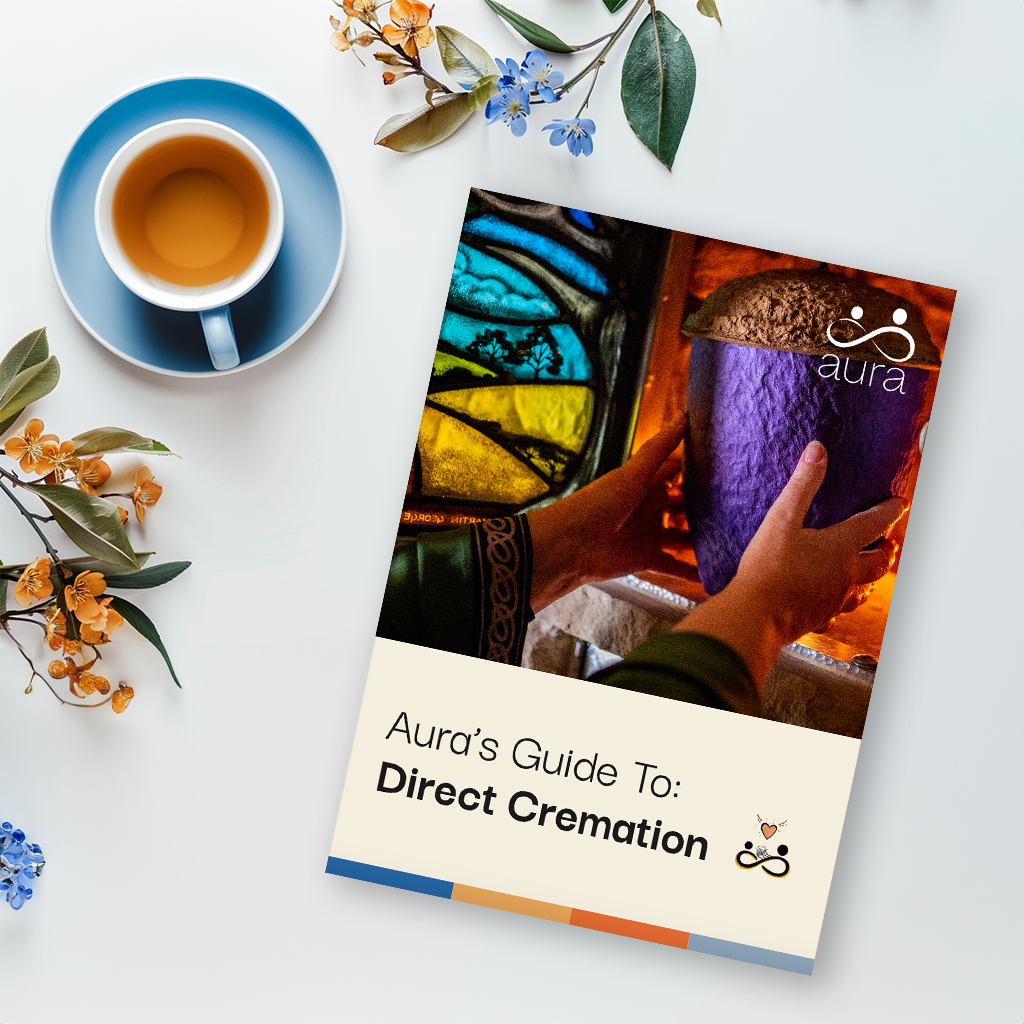
If you’d like more information about direct cremation and Aura’s funeral plans, then our downloadable guide can help. Find out why others are choosing this affordable, no-fuss alternative to traditional funerals and why it might be right for you too.
Download our guide by clicking the link below and learn more about this simple funeral plan option.
Only in small amounts. Royal Mail allows up to 50 grams per item in the post, a small symbolic portion, not a full set of remains. Full ashes generally need a specialist courier or in-person collection instead.
Most often, they’re collected in person by whoever is authorised, or handed over by the funeral director. Specialist couriers exist for situations where ashes need to travel further.
Yes, specialist ashes-courier and repatriation services can handle international delivery, generally with documentation such as a death certificate copy and cremation certificate, and an x-rayable urn for air travel.
In a limited way. Royal Mail permits up to 50 grams per item, in a sift-proof, securely closed container with sturdy outer packaging, but this only covers a small token portion, not a full set of ashes.
Postal and courier services generally don’t accept liability for loss or damage to ashes in transit. It’s worth bearing this in mind and asking any specialist courier directly about their own procedures before sending a full set.