×

Plan ahead and save up to £200 Save up to £200 on selected funeral plans until 31 October. T&Cs apply. Click here for full details.

Two Together: Save £100!Save £100 when you purchase two funeral plans together. Call us for more details.


Written by Adam McIlroy.
25 minute read

Collecting ashes is the step where a family receives the cremated remains of a loved one from the crematorium or funeral director, usually a few days after the cremation has taken place. There are clear rules about who can collect ashes in the UK and a few practical things worth knowing about what to expect, including the container the ashes arrive in, how heavy they tend to be and how the moment itself can feel.
If you’ve been brought to this article because you’re facing a difficult time, we recognise the weight of what you’re going through. We’re here to help whether you’re arranging a funeral now, thinking about your own funeral in the future or collecting the ashes of someone who has been in our care.
Key takeaways:

Collecting ashes is the step where a family receives their loved one’s cremated remains, usually 3–7 days after the cremation has taken place. The ashes will be ready for collection from the crematorium or, more commonly, from the funeral director who arranged the service.
As part of the cremation process, the person being cremated is turned to ash inside the cremator. It typically takes 1–3 hours for the cremation itself to complete, depending on the size of the person and the coffin used. Once the cremator has cooled to a safe temperature, the remains are carefully gathered with a specialised tool, often a rake, and placed into a receptacle such as an urn or scatter tube. The cremator is then cleaned thoroughly before the next cremation.
The remains are gathered by a crematorium attendant, who cross-references them with the time of the cremation and the identity markers from the coffin. This is how each crematorium makes sure the ashes can be correctly matched with the person who has died, so the family knows they are receiving the ashes of their loved one.
Before a cremation can legally go ahead, there’s a fair amount of paperwork to complete, from cremation forms to registering the death. The funeral director coordinates this, and it’s part of what allows the identity of the person who has died to be tracked from the moment they’re brought into the mortuary to the moment their ashes are ready to return to the family.
One of the cremation forms you’ll need to complete is the ‘Application to Cremate’ form, known as Cremation Form 1 (Form A1 in Scotland). On it, you name the person who will come to collect the ashes later. If that won’t be you, you can name someone else. When the named person comes to collect, they’ll need to show ID before the ashes can be released.
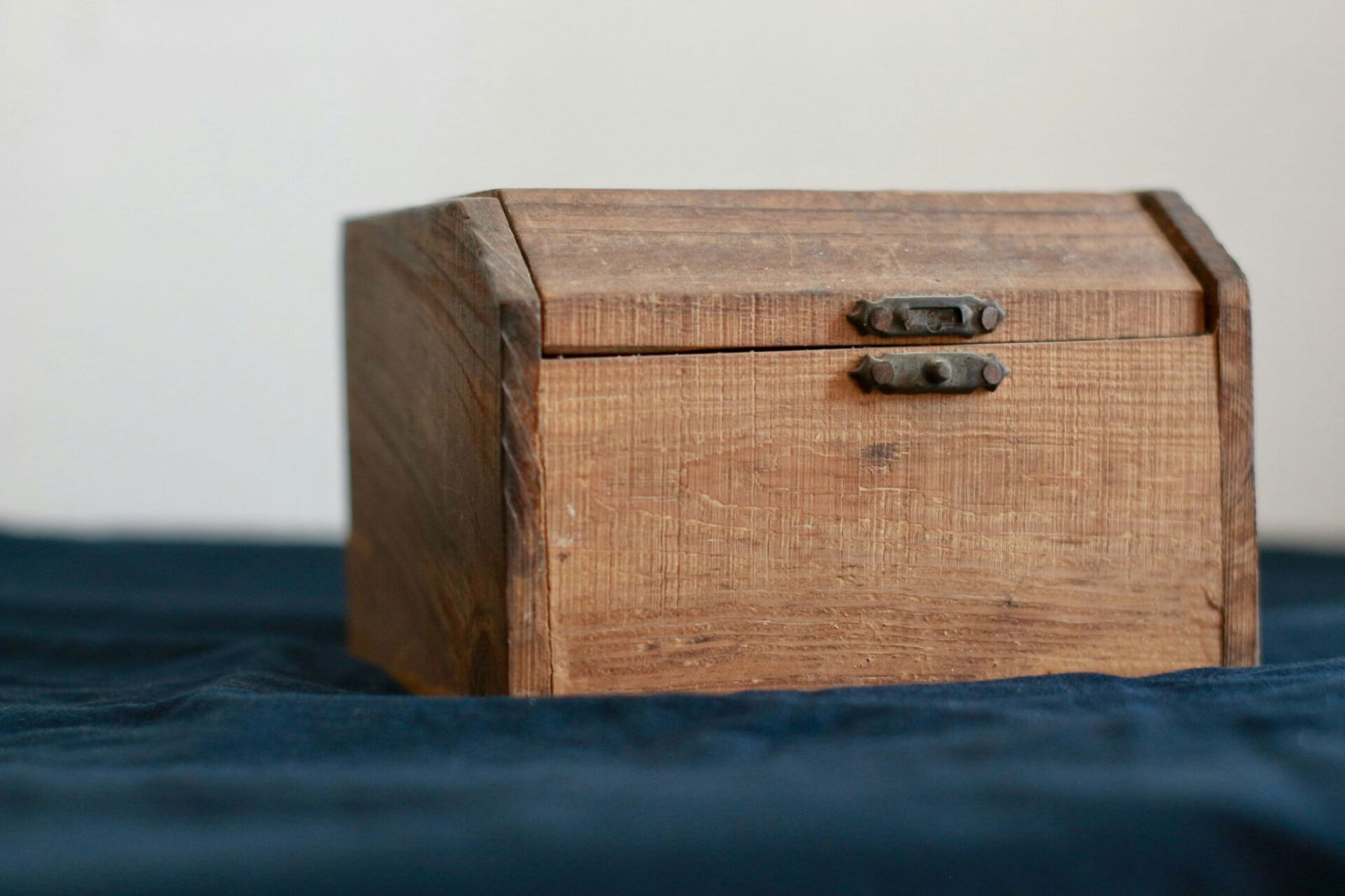
If you’re wondering who receives ashes after cremation, it will usually be the person named on Cremation Form 1, or someone they have authorised to collect them. This is usually the next of kin or the executor, but it can be anyone the applicant chooses to name when the form is completed.
If the crematorium is offsite, the funeral director is authorised to collect the ashes of the person who has died and may do so as part of their service. For instance, Aura offers a hand-delivery option to the families of those who have received an Aura direct cremation.
That said, many people prefer to collect the ashes themselves directly from the crematorium. The person who signs the cremation form, or the person they have named in their stead, is the only one legally allowed to collect ashes, either from the crematorium or from the funeral director. Normally, this is the next of kin, as that’s usually who takes on the responsibility of obtaining the Death Certificate.
It’s sometimes the case that family disputes arise over ashes rights and who should collect. It’s an example of why end-of-life planning and talking about death and dying early matters, leaving these conversations until it’s too late can create real tension between people who are already grieving. If you do find yourself in a dispute over ashes, you may be able to apply to the Chancery Division of the High Court, which can hear cases relating to such matters. If you are in this position, it’s worth seeking legal advice as soon as you can.
The general principles around collecting ashes are similar across the UK, but Scotland and Northern Ireland operate under slightly different legal frameworks. The differences are mostly procedural rather than practical, but worth knowing.
Cremations in Scotland are governed by the Burial and Cremation (Scotland) Act 2016, which replaced earlier legislation and modernised the framework.
The ‘Application to Cremate’ form is called Form A1 in Scotland (rather than Cremation Form 1 in England and Wales), and identification documentation may differ slightly. Procedures for documentation and authorisation can vary, so it’s always worth checking directly with the local crematorium or funeral director.
Northern Ireland operates under a broadly similar framework to England and Wales, with some regional procedural variations.
If you’re collecting ashes in Northern Ireland, check with the local funeral director or crematorium for the specific paperwork they’ll expect. As a rule, ID requirements and the named-collector principle apply throughout the UK.
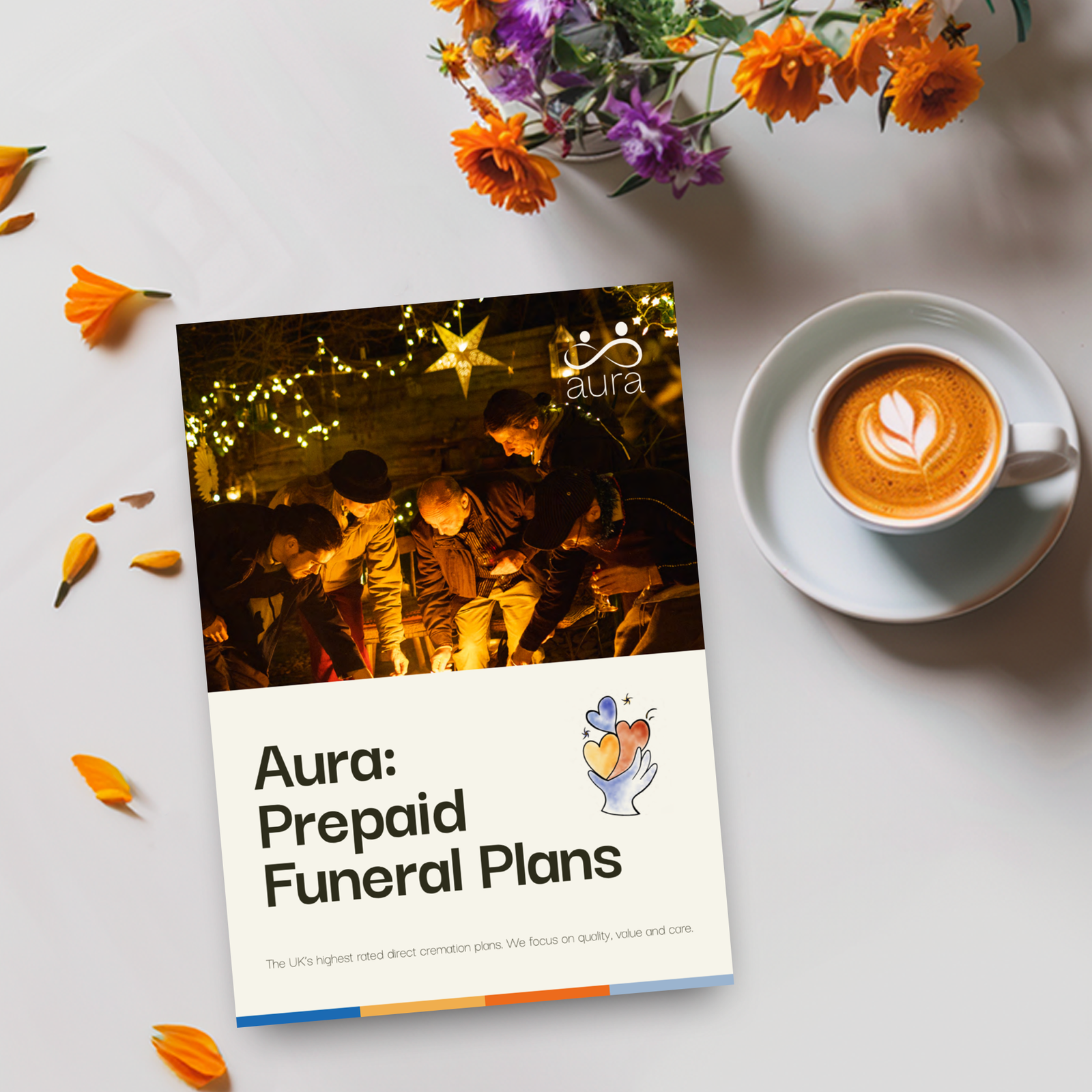
If you’d like to know more about how to plan a cremation with Aura, our brochure is a helpful place to begin.
Our funeral plans are a helpful way to put everything in place for you or someone else.
When the time comes, our experienced team will be here to guide you through each step, offering support and advice whenever you need it.
To find out more about how our plans work, what’s included, and our story, you can request a brochure by clicking the link below. We will then send you a copy by email or First Class post—whichever you prefer.
In the UK, most funeral directors will keep ashes for up to five years if they haven’t been collected, in line with guidance from the National Association of Funeral Directors (NAFD). After five years, the ashes are usually scattered in a Garden of Remembrance at the funeral director’s discretion, with family members informed in advance where possible.
According to guidelines published by the NAFD in 2012, funeral directors should hold onto unclaimed cremated remains for a period of five years and make every reasonable effort to find the family during that time. If after five years nobody has come forward, the ashes are typically scattered respectfully by the funeral director or crematorium at a local Garden of Remembrance, preserving the dignity of the person who has died.
The NAFD guidelines are not a legal requirement, they’re a voluntary code from an industry body working to raise standards. In practice, the vast majority of UK funeral directors follow them.
If no one collects the ashes within the time limit set by the funeral director (typically five years in the UK, in line with NAFD guidance), the funeral director will scatter or inter the ashes in a respectful manner, usually in the crematorium’s Garden of Remembrance.
The funeral director has both a legal and an ethical duty to make reasonable efforts to contact the family before any final disposition. Letters, phone calls and increasingly emails are usually attempted multiple times across those five years.
There are many reasons families don’t collect ashes. Estrangement. The death of the only person who could have collected them. The family being abroad. Sometimes simple oversight in the long aftermath of a bereavement, when so many other practical things needed attention first.
If you find yourself realising, months or even years later, that a relative’s ashes were never collected, contact the original funeral director or crematorium directly. In many cases the ashes will still be held and they can advise on next steps.
For families in disputes over who should collect, the funeral director will generally only release the ashes to the person who signed the original cremation form, not to a sibling or other relative without that person’s authorisation. This isn’t about taking sides, it’s about following the legal framework that protects everyone involved.
People do all sorts of different things with the ashes of a loved one. There’s the practice of interment of ashes, the increasingly popular ash scattering ceremony, and even turning a small amount of ashes into a cremation ashes tattoo as a personal tribute. But one of the most common cremation ashes ideas is simply to keep them at home.
For some families, scattering isn’t practical or desirable they’d rather keep the remains of their loved one nearby. If keeping ashes at home, the urn (the vessel containing the ashes) is often displayed somewhere meaningful, such as on a mantelpiece in the main room. Equally, it might be kept in a private part of the house. Both are right — there is no convention here that matters more than what feels right to you.
Cremation urns have been part of the history of cremation for thousands of years, and the basic form hasn’t changed all that much. What has changed is how personal they can now be. It’s increasingly common to decorate or commission an urn that better reflects the person whose remains it holds.
There are companies that specialise in creative, original urns — handmade ceramics, sculpted pieces, even bespoke artwork. There’s also an increasing demand for alternative funerals, and with that, increasing interest in eco-friendly storage. In some cases, families choose a biodegradable urn that can be buried at a natural burial site, fused with the sapling of a new tree.
For families thinking about the environmental footprint of their loved one’s memorial, eco-friendly options for collecting and storing ashes are widely available in the UK. These include biodegradable urns, natural-material containers and ways of scattering or burying ashes that return them gently to the natural environment.
Made from natural materials — paper, salt, sand, clay or plant fibre — biodegradable urns break down naturally over time.
They’re designed for burial or for scattering at sea (paper urns unfold; salt and sand urns dissolve in water). Many UK suppliers offer them at price points comparable to traditional urns.
These are specifically designed for scattering, with a sliding lid that releases ashes gradually and minimises blowback.
They’re typically made from cardboard or other natural materials, and they’re a practical choice for outdoor scattering ceremonies where you want a clean, controlled release.
Ashes can be incorporated into a planting urn (Bios Urn and similar products) that contains a tree seed, the ashes nourish the soil as the tree grows.
Some specialist companies offer products combining ashes with native UK tree species, so the resulting memorial is rooted in the local landscape.
Some UK woodland burial sites accept ashes for interment, with a tree planted at the site to mark the location.
Memorial woodlands offer a permanent, natural place to visit, somewhere that grows and changes year by year, rather than something static.
It’s worth keeping a copy of the Death Certificate and/or Cremation Form 1 with you, in case anyone asks about what you’re carrying. There’s no law against travelling with ashes by car or public transport, but being prepared makes the journey smoother. If you’re using public transport, it’s also worth a quick check of the provider’s policies — some have specific guidance on transporting ashes. And remember to always ask the permission of the landowner before scattering ashes anywhere.
The process of collecting ashes is broadly the same regardless of whether the cremation was a traditional service or a direct cremation, but there are a few practical differences worth knowing, particularly around how and when the ashes are returned to the family.
We hope this article has been useful. Collecting ashes can feel like a big moment, especially if you’re not sure what to expect or what to do once they’re home.
Aura is the top-rated national ‘Cremation Services‘ provider on Trustpilot, with a rating of 4.9/5 stars. Our Aura Angels have helped us earn that score by offering funeral arranging knowledge in a way that feels personal, not procedural. The level of care found in our service is hard for larger companies to match, because we treat every family individually.
That’s true whether you need our direct cremation service for a funeral now, or you’re thinking about your own future funeral via one of our prepaid funeral plans.
*Terms and conditions apply. You will receive a funeral plan summary before purchase.*


If you have any questions, would like a brochure or simply would like a chat through our services, our award-winning team is here to help.
Unlike other providers, we won’t hassle you with constant calls. We’ll simply ensure you have the information you need and leave you to come to a decision in your own time. When you’re ready for us, our team will be ready to help.
Our team is available Monday–Friday, 9.00–5.00pm.
Cremated ashes are usually pale grey, light tan or off-white in colour, with a fine, granular texture similar to coarse sand. They are heavier and denser than the soft ash of a campfire. An adult cremation typically produces 2–3.5 kilograms of ash, which can feel surprisingly heavy when first lifted.
Adult cremated ashes typically weigh between 2 and 3.5 kilograms (around 4.5 to 8 lbs). The general industry rule is roughly one pound of body weight produces one cubic inch of cremated remains. Most people are surprised by how heavy the container feels when they collect it.
Only the person named on Cremation Form 1 (Form A1 in Scotland) is legally allowed to collect the ashes. This is usually the next of kin or the executor of the estate. They will need to bring photo ID when collecting from the crematorium or funeral director.
You’ll need valid photo ID, typically a passport or driving licence, that matches the name on Cremation Form 1. The crematorium or funeral director will check this against the cremation paperwork before releasing the ashes.
Only if they are named on the cremation form as the person authorised to collect them. If you want someone else to collect the ashes, make sure their name is listed before the cremation takes place.
According to NAFD guidelines, funeral directors are expected to hold unclaimed ashes for up to five years. After that, they may be respectfully scattered in a local Garden of Remembrance.
Yes, there are no laws prohibiting the transport of ashes within the UK. However, it’s advised to carry ashes in a sealed urn or scatter tube, preferably within a protective container or bag to avoid spillage.
While not legally required, carrying a Death Certificate or a copy of Cremation Form 1 is a good idea in case authorities ask for verification. This applies especially when using public transport or if stopped while travelling.
Yes, but you’ll need to check:
The destination country’s customs rules regarding human remains
The airline’s policies (e.g., container requirements or documentation)
Be sure to carry all relevant documents, including the Death Certificate, Cremation Certificate, and your relationship to the deceased.
You can:
Keep them at home in an urn or memorial container
Scatter them in a meaningful place (with permission)
Bury them in a cemetery or natural burial ground
Create keepsakes, such as jewellery or artwork using a small portion of the ashes
Yes. Many people choose to display the urn somewhere meaningful, like a mantelpiece or a private room. Some cultures and individuals find great comfort in having their loved one close.
Yes, ashes can be divided between multiple family members, especially when creating keepsakes or holding multiple ceremonies. Let your funeral director know in advance if you wish to do this.
If unclaimed, ashes are typically stored by the funeral director or crematorium for up to five years. After this, they may be scattered respectfully in a designated area, like a crematorium’s Garden of Remembrance.