×
Two Together: Save £100!Save £100 when you purchase two funeral plans together. Call us for more details.


Written by Adam McIlroy.
18 minute read

Article reviewed by Kerry Jones, Senior Lecturer in End of Life Care on February 2, 2026.
The importance of death education is becoming more widely recognised, as death education can help us reduce death anxiety, prepare emotionally for loss, and feel more able to talk openly about dying and grief. Throughout life, we are taught many practical and academic subjects, yet conversations about death and end-of-life planning are often avoided until we are personally affected by bereavement. In reality, understanding death can help us feel less fearful and more prepared for the future.
Death education encourages people to think proactively about matters such as wills, funeral wishes and end-of-life care, while also helping families navigate grief and difficult decisions with greater confidence. It can also improve awareness of palliative care and the support available to people who are dying and those close to them. In this article, we will explore the importance of death education, and why learning to talk more openly about death can help us live with greater clarity, compassion and peace of mind.
Key takeaways:

In order to understand the importance of death education, we need to know roughly what it is. Death education concerns three main areas of death: being prepared for your own death (i.e., end-of-life planning); how to deal with grief; and how to get more out of life, without a fear of death or of having regrets. It is an eclectic area of education that has relevance for us at all stages of our lives, but many of us only begin to think about death when we suffer the pain of a bereavement.
The purpose of death education is to make people in society more conscious of death. By accepting our own mortality, we can get more joy out of life, not wear our grief so heavily, and be more prepared to meet our own end. Death learning encompasses not just factual knowledge, but emotional and practical competence too.
Death can be a surprisingly complicated subject. For instance, even something as apparently simple as arranging a funeral has many different aspects, from administrative and logistical, to financial and emotional. End-of-life planning generally forces us to confront the possibility that we may lose our mental capacity, and to make provisions for that through setting up a Power of Attorney. It can be bewildering and intimidating, not to mention expensive to face all this, but most of us end up trying to learn about all this in the midst of our grief. That’s far from an ideal situation, and that’s exactly why death education is so important.
Death education is also closely connected to the idea of “death literacy”. Death literacy goes a step further than death education — it refers to the practical knowledge, skills and confidence needed to navigate death, dying and bereavement. Someone with strong death literacy may not only understand what happens when we die, but also know how to access end-of-life support, help care for a dying loved one, and process grief in a healthy way. In many ways, death education is what helps build death literacy across society.
Death education matters because it promotes emotional preparedness, encourages meaningful conversation among family and friends, and acts as a basis for more informed end-of-life decisions.
Grief is something that can overwhelm us, whether it leaps out of the blue, such as when we are dealing with the unexpected death of a loved one, or whether it grinds us down over time. All of us will have to face it at some point in life, and multiple times in all likelihood, as we get older and navigate through life. Whilst we can never hope to be completely immune to it, by preparing ourselves emotionally – by building and maintaining our pillars of strength — we can become more resilient to its effects and bounce back from it more quickly.
Being emotionally prepared for our own death, or for death to disrupt our lives at any moment, will take time and courage, as well as a deep understanding of ourselves. But the impact can be truly rewarding, reducing our anxieties, and granting us a better quality of mental health.
A part of being emotionally prepared for death, and of death education generally, is encouraging meaningful conversations on the subject. Talking about death and dying with our loved ones can be difficult for a variety of reasons: we may be at different stages of our death education, and have a greater fear of the subject or preparedness to face it; we may have different beliefs on death and funerals and disagree about the best way of remembering a loved one. We may also not be ready to say goodbye.
But it’s ultimately by talking that we can share our end-of-life wishes with our loved ones, and learn about theirs. They may have important things to say about their will, or about their health wishes, such as a Do Not Resuscitate (DNR) Order. Ultimately, emotional openness on this subject, and a willingness to talk, can help everyone to feel more comfortable with your decisions, and to prepare more effectively for death in their lives.
Ultimately, all of this leads to better death-related decision making. If you keep everything to yourself, or never even think about it, it may be too late to do anything about these matters. You may end up leaving your family in the difficult position of needing to, for instance, organise (and pay for) your funeral without having discussed matters with you; or making difficult decisions about your health.
Being open, for instance, about wanting a direct cremation, can give you the chance to explore the best options in advance. Without thinking ahead about your own mortality, you won’t get yourself into a position to compare funeral plans, or decide whether you’d want to use funeral insurance to pay for your funeral.
Death education is important throughout different phases of life, and in different professions. It has a role to play in schools and universities; is of vital importance to health professionals; and can benefit communities across Britain too.
Death can upend our lives at any time, and unfortunately, doesn’t spare the young in favour of the older. Death has the ability to waylay and disrupt education, especially when a child or teenager experiences bereavement. Depending on the closeness of the loss, grief can affect emotional wellbeing, concentration and confidence for a long time. This is one of the reasons why death education in schools can be so valuable.
Even young children are often more curious about and capable of understanding death than we might assume. While adults may feel tempted to soften difficult truths, children can benefit from open, age-appropriate conversations about grief and loss. Stories about death, remembrance and change can help children process emotions and feel less alone in what they are experiencing.
Young adults at university are often navigating independence, identity and major life transitions for the first time. Experiencing bereavement during this period can feel especially destabilising, affecting studies, mental health and relationships. Death education in higher education settings can help students better understand grief, emotional resilience and end-of-life issues.
Universities also play an important role in educating future healthcare professionals, counsellors, social workers and carers, many of whom will encounter death regularly in their careers.
Healthcare professionals are perhaps the most likely among us to face death regularly as part of their profession. They experience the full spectrum of death, from accidents and emergencies, to long, slow disease. They also see how things like dementia and end of life can go hand in hand with death. As such, they can help to facilitate useful conversations between those who may be dying and their family about their healthcare professions.
For that reason, they are both fonts of knowledge about death education, as well as some of the people who can benefit from it most; especially the psychological preparedness, which is essential for allowing them to keep working. Doctors, apart from treating us as long as possible, and helping us to be comfortable in death, they also have a vital part to play in the death registration process. The ‘Medical Examiner’ needs to verify the cause of death before we can begin to register the death ourselves.
Death education can support mental health by helping reduce death anxiety — the fear of loss, dying or mortality. Learning about grief and end-of-life care can make these experiences feel less frightening and isolating.
It also helps people understand that grief is a natural, non-linear process, with emotions that can change over time. Open conversations about death may help bereaved people feel less alone and more supported.
There has been a decline of religion in the UK in recent decades, meaning that perhaps fewer of us are drawing upon communities of faith to help us navigate the difficulties of death. As such, in becoming more death savvy, communities are beginning to offer alternative forms of support. A more and more common occurrence is that of the death cafe; a safe space for people to go and talk about grief and death with others local to them.
Many find that this a great way to speak their minds about death with other people who may not be intimately familiar with their situation. It offers a veneer of anonymity that allows them to be more frank about their feelings, but it also provides a chance to make local connections with people that grow beyond bereavement. Sue Ryder is a charity that can help you to locate death cafes near you.

The cultural environment in the UK regarding death is complicated. Those promoting death education often feel they are struggling against strong headwinds of cultural resistance. There is still something of a cultural taboo about death in the UK, with many of us preferring not to talk about it at all.
Despite the increasing popularity of direct cremation — something that couldn’t be possible without a wider cultural shift in attitudes towards death — many of us still mistake it for a so-called ‘pauper’s funeral’, or otherwise think of it as somehow inappropriate or too clinical.
Currently, there’s a patchwork approach to death education in the UK, with it being handled for the most part in the home. There seems to be an appetite for death education to be added to the school curriculum in England, with a YouGov poll suggesting that 67% of 4,028 British adults say that it should. Given that it is currently not taught in schools, our death education is a mix of personal experience, spiritual and community engagement, and engagement with art such as literature and ancient myths and legends about death. As a result, how prepared we are for it depends on our own personal circumstances.
The future of death education lies in our ability to expand accessibility to it, and to normalising death in our culture.
Ultimately, we need to facilitate the curiosity that people might have about death. We can do this by offering places to talk, such as death cafes, as well as courses online to help people understand more about bereavement, and how to support others with their grief. There are organisations out there, such as Good Life Good Death Good Grief, in Scotland, which aim to promote knowledge on all parts of death education. There are lots of different charities across the UK doing a similar thing, such as Cruse Bereavement Support and Marie Curie.
By adding elements of death education into our school curricula, we can increase accessibility across the nation, and increase the general awareness of the importance of death education.
We are now beginning to see the normalisation of a new attitude towards death in the UK. The traditional funeral, whilst it still endures, is no longer as popular as it once was. The rise of direct cremation aside, there is also a burgeoning interest in alternative funerals, such as woodland burials, or burials at sea; and in non-religious funerals. We’re also witnessing the popularisation of end-of-life celebrations — non-traditional, themed and personalised gatherings — and even ‘living funerals’ attended by the person whom all those gathered are there to celebrate whilst they are still alive. There is even a growing practice to creatively use cremation ashes in pursuit of ever more meaningful keepsakes and items.
The more that these practices take root, the more that a more open attitude to death will be normalised. But, ultimately, communication is key, and until we become comfortable talking about death with one another, we won’t be able to bust the taboo around it.
In 2019, Aura was founded by Paul Jameson, who, back in 2017, was diagnosed unexpectedly with motor neurone disease. He set up Aura with son, David (our CEO) and a family friend called Ben (our COO), and one of the main reasons behind this was to help break the taboo around mortality. Ultimately, Paul was forced to confront his own mortality far sooner than he thought he would need to, and he realised how little he really knew about how to prepare. He has written a memoir of his time with a terminal illness, and of grappling with his mortality, called Very Much Alive, in which he movingly reflects on some of the difficulties he has faced.
Aura is the top-rated, national ‘Cremation Services’ provider on Trustpilot, with a rating of 4.9/5 stars, and we offer those services to those who need them in the here and now, and in the shape of our prepaid funeral plans. Our industry-leading team of Aura Angels provide our services with a people-centred compassion which cannot be found anywhere else; through them, we are determined to offer a level of quality that never decreases below that which Paul would want for his own family.
However, on top of that, as part of our ambition to break the taboo around death, we also want to help people to talk about it and to think about it more clearly. That’s why we started the Aura Circle; an online, digital tool which lets you plan your legacy, and tell your life-story.
We hope you have found this article about the importance of death education useful. If you think that we would be able to help you with your own end-of-life planning journey — a vital part of being more educated about death — why not download our funeral plan brochure today?
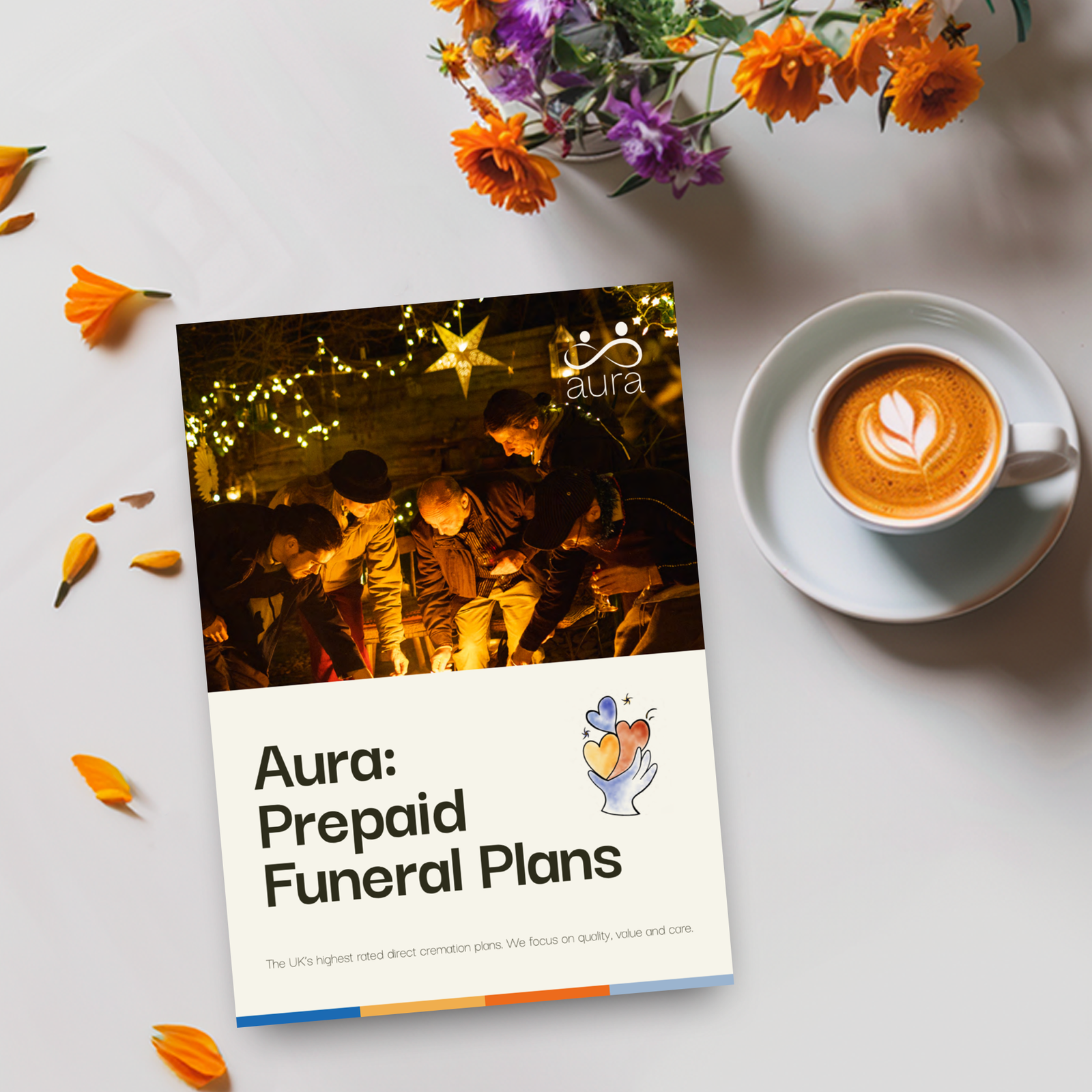
If you’d like to know more about how to plan a cremation with Aura, our brochure is a helpful place to begin.
Our funeral plans are a helpful way to put everything in place for you or someone else.
When the time comes, our experienced team will be here to guide you through each step, offering support and advice whenever you need it.
To find out more about how our plans work, what’s included, and our story, you can request a brochure by clicking the link below. We will then send you a copy by email or First Class post—whichever you prefer.
Death education teaches people about three main areas:
Preparing for their own death (e.g. funeral planning, wills)
Understanding and coping with grief
Living more fully by accepting death as a natural part of life
It’s designed to increase awareness, reduce fear, and empower people to make informed, meaningful end-of-life decisions.
It helps us:
Be emotionally prepared for loss
Face our own mortality with less anxiety
Talk openly with family and friends about death
Make informed choices about funerals, wills, and healthcare
Support others who are grieving
Research in thanatology suggests that death education includes four main dimensions: cognitive (understanding death and grief), affective (exploring emotional responses), behavioural (knowing how to support others through bereavement), and valuational (reflecting on meaning and what matters most in life).
Together, these dimensions help build emotional and practical preparedness around death and dying.
There is no single agreed “3 C’s” framework for grief, but many bereavement experts emphasise similar themes: connection, compassion and continuation. Healthy grieving often involves connecting with others for support, showing compassion towards ourselves during difficult emotions, and continuing life while still honouring the person who has died.
Death education can help people develop these skills by encouraging more open conversations about grief, loss and emotional wellbeing.
Ideally, it should begin early — in schools or at home — rather than waiting until a personal loss occurs. Young people, even children, can benefit from age-appropriate guidance about death.
Death education can be helpful in:
Schools & universities: For emotional preparedness and resilience
Healthcare settings: For professionals regularly working with end-of-life care
Communities: Through support groups, death cafés, or workshops
Homes: Through open family conversations
Helps them understand and process grief
Reduces confusion, fear, and isolation
Builds emotional resilience early in life
Encourages empathy and communication skills
Children often handle death better than expected when it’s explained clearly and honestly.
By reducing death anxiety and encouraging emotional preparedness, it helps people cope better with grief, make peace with their mortality, and live more intentionally. It also builds resilience after a loss.
It helps individuals:
Plan their own funerals or legacy
Discuss advance care directives like Do Not Resuscitate (DNR) orders
Avoid leaving loved ones with stressful, costly decisions
Choose meaningful funeral options like direct cremation or eco-friendly burials
They:
Help families and patients navigate end-of-life care
Guide medical decisions (e.g., palliative care, DNR orders)
Certify deaths for registration
Need their own emotional preparedness to cope with frequent exposure to death
There’s still a cultural taboo around discussing death in the UK. Although 67% of people in a YouGov poll support including death education in the curriculum, it’s not yet standard in schools. Most learning still happens informally, at home or through personal experience.
Aura – Provides funeral planning tools, articles, and resources
Cruse Bereavement Support – Offers grief counselling and education
Sue Ryder – Connects people with local death cafés
Marie Curie – Focuses on end-of-life care and guidance
Good Life Good Death Good Grief – Promotes death education in Scotland
It means:
Making it okay to talk about death openly
Treating it as a natural part of life, not something to hide from
Integrating death into everyday education, media, and planning
Reducing stigma so people can better grieve, prepare, and connect